Thursday, September 13, 2012

Living the Fullest Through Sickness--

Petra Bubnikova

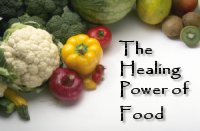
When one enters the early stages of cancer, it not only strikes the patient's mental state and psyche, but also that of their friends and family.  While the pain of cancer can only be felt through the patient itself, others still experience other types of pain.  However, you can help battle cancer and improve one’s quality of life through a healthy and nutritious diet.  It is important to know what is good and bad to eat while going through cancer and chemotherapy treatments. 
 
Healthy foods will not worsen the side effects of cancer.  If one were in contact with asbestos, one would not worsen their mesothelioma side effects when getting the right nutrition.  This is the same for any other form of cancer as well.
Maintaining your energy and strength during chemotherapy is key.  This can be done with easy to eat foods that include protein, dairy products, and also various beans, soy and nuts.  All of these foods are easy to eat and digest for the cancer patient who may be going through strenuous chemotherapy treatments.

Probably one of the most important things while battling cancer is to avoid weight loss.  Substantial weight loss is a very common and very serious problem for cancer patients.  When going through chemotherapy, the body will automatically fight the stress induced by these treatments by increasing the body's metabolism.  It is important that you eat enough food that is packed with calories and enriched with protein.  A combination of proteins, fatty foods, and others will help stop dangerous weight loss.


Eating healthy while going through cancer, also includes staying hydrated.  It is said that most of the nausea that is felt by cancer patients going through therapy is likely due to lack of hydration.  Most people who need to stay hydrated drink 8 to 10 glasses of water each day. Hydration is key to helping your kidneys function, as some medication can be tough on your kidneys. ~~
 
 About the Author--
Bringing a wealth of personal and professional experience to the organization, Jillian McKee has worked as the Complementary Medicine Advocate at the Mesotheliona Cancer Alliance since June of 2009.  Jillian spends most her time on outreach efforts and spreading information about the intergration of complementary and slternative emdicine when used in conjunction with traditional cancer treatment.  Connect with Jillian on Facebook, Twitter, Google and her Blog.


Labels: , , ,

Sunday, October 01, 2006

Part 1 - "The Stages of Love"

--by Robert Elias Najemy


What is Love?  

Rosendahl
Love is our greatest need. Is it our highest most fulfilling state? Do we really love or are we simply attached to, identified with or dependent upon the persons we "love"? Is our love free and unconditional, or is it mixed with various needs, conditions and demands? What is unconditional love? Is it possible for us to cultivate it? What is the difference between love and attachment? How can we determine whether what we feel is love or attachment? How can we purify our love and move into a higher level of consciousness?  These are some of the many questions that we need to answer in order to create happiness.


Defining Love--

Love is a very difficult word to define, perhaps because its reality approaches spiritual dimensions, which are beyond time and space, and thus, our comprehension. Love is perhaps more easily described by what it is not. Love is not fear, hurt, pain, jealousy, bitterness, hate, separateness, lust, attachment, aggressiveness, ego-centeredness, indifference, possessiveness, suppression - the list goes on.

Love, like God, peace and other spiritual realities, can be perceived more easily through the effects that it creates. We cannot see the wind, but we can see its effects, such as the leaves moving, branches swaying, or the sound of air rushing. We know wind exists by its various side effects. We know there is a Creator because we perceive its effect - creation itself.

What then are the effects of love? Love creates feelings of unity. We feel toward others as we feel towards ourselves. We are as interested in their welfare, happiness, success, health and spiritual growth as much as we are about our own. Loving others means wanting them to be happy in whatever ways they are guided to their happiness. It breeds understanding, compassion, forgiveness, happiness, excitement, peace, joy, fulfillment and a desire to be helpful in any way we can.

Love is expansion beyond our ego limitations. It is the ability to identify with the other, to let go of our self-interest and personal needs enough to really hear and understand the other's needs and interests. It means caring enough to sacrifice, when necessary, our own pleasures and desires when the other's needs are obviously more important.

Love is the force that brings about unity and harmony. It is the "glue" of the universe. It helps persons with different egos, desires, programmings and needs to overcome all those potentially repelling forces and unite. Love needs not so much to be learned or cultivated, but rather released or brought from within us to the surface. We are love. Our basic nature is love. However, our ignorance, fear and attachment have buried it so deeply within us that it is sometimes difficult to summon or maintain. Loving others steadily, independently of their behavior, is not an easy achievement.


Love vs. Need--

The power of attraction which we call love is expressed on many levels and in countless ways. The most basic level is that of need. We often use the word love when we really mean, "need". We say, "I love you." But, if we analyze ourselves deeply, we realize we really mean, "I need you." This is the basic message of most love songs. They lament with sadness, pain, agony and cry out "you left me, I cannot live without you. I need you."

This is not the highest form of love. It is love mixed with need, attachment and addiction. If it were pure love and the other was happier by leaving us or even happier with someone else, we would be happy for him or her, not full of sadness for ourselves. Loving others means wanting them to be happy, healthy and successful in the ways that they are guided to be. Love does not create the pain we feel when someone leaves us or rejects us. That pain is generated by our dependency upon that person for our security, pleasure or affirmation.

Needs and attachments create fear, pain and suffering. Love creates happiness, fulfillment and the experience of our True Selves.  --Be Well


Continue reading...  Part 2 - "The Stages of Love"


About the Author: Robert Elias Najemy is a spiritual empath, life coach and author of more than 30 books, 600 articles and 400 lectures on Human Harmony. His recently released book "The Psychology of Happiness" (ISBN 0-9710116-0-5) is available at Amazon. Robert makes his home in Athens, Greece. Please visit his website here.


Image credit:  Rosendahl at:   http://www.copyright-free-images.com

Labels: , , , , , , ,

Part 2 - "The Stages of Love"

Love or Need for Security?
--by Robert Elias Najemy


Our Love is Mixed With Need--


Our love is still mixed with a considerable amount of need. Love wants to give. Need wants to take. Sometimes what we are seeking to take is very subtle and requires deep inner inquiry. Whenever we feel pain, fear or anger in our relationships, it is because we believe that our needs are in "danger" of not being satisfied. When this happens, our "love" turns to hurt, disappointment, fear, loneliness, inferiority, or bitterness, and sometimes, anger, hate, rage and desire for revenge. How can love become all these negative emotions? It cannot. The simple truth is that our emotion never was pure love to begin with. It was an "attraction" based to some degree also on need. This does not mean that we should reject ourselves because we have seldom really loved purely. As we are not yet enlightened spiritual beings, how could we? It would be like rejecting ourselves because we do not yet have a university diploma when we are still in the first grade or because we are a flower bud, which has not yet blossomed. It is only natural that we cannot yet love unconditionally. This is our stage of evolution.


Freeing our Love from Need--

The first step towards opening our hearts to real love is to accept and love ourselves exactly as we are with all our weaknesses and faults. Only then can we proceed effectively. The second step is to begin observing the feelings that are stimulated in our transpersonal. Through objective self-observation, we can determine in which situations we love unconditionally and in which we are feeling "loving" with specific conditions. Following are some examples that will help.


Needing Those Who Make Us Feel Secure--

We look to others for security. We might seek security from our parents, spouses, siblings, children, employers, friends, ministers, spiritual teachers or others. We do feel love toward these beings, but often that love is based on the fact that they offer us a sense of security. If they start behaving in ways that obstruct our feelings of security or if they decide to leave or ignore us, will we still love them? If our employer fires us, will we still love him or her? If our parents throw us out onto the street, will we still love them? Or is our love tightly woven with the need for security? If as parents we dream that our children will become economically well off and socially accepted professionals, will we love them the same if they become street artists, beggars or anarchists? Some parents will be able to; others will not.

The basic question is whether or not our feelings of love are steady and consistent regardless of the various changing behaviors of those we "love". In each case where we perceive our heart closing, we need to discover what we fear in that situation. What might we believe is in danger? Most frequently we lose our love when we fear that our security, self-worth, freedom or pleasure are in danger. Only when we have realized total inner security, perhaps based on an inner spiritual awakening or on our faith in the Divine, will we be able to love without security attachments. Only when we know that we can live without others can we really love them steadily.

Society has caused us to completely confuse this matter. We believe that if we love others, then we must be totally dependent on them and should fear that our world would fall apart if something happens to them. This is insecurity. This is a lack of awareness of our inner spiritual nature and our ability to deal with life. It has nothing to do with love.

Perhaps this is why the Apostle John wrote, "Where there is perfect love, there can be no fear."

--Be Well
Continue reading Part 3 - "The Stages of Love"


About the Author: Robert Elias Najemy is a spiritual empath, life coach and author of more than 30 books, 600 articles and 400 lectures on Human Harmony. His recently released book "The Psychology of Happiness" (ISBN 0-9710116-0-5) is available at Amazon. Robert makes his home in Athens, Greece. Please visit his website here.


Image credit: Rosendahl   


Get my email updates here:


logo 275

Labels: , , , , , , , ,

eCourse - "Laughter for the Heart"

Are you getting the proper amount of laughter each day?

Explore the theory of laughter therapy and apply it to your life to boost your immune system and relieve tension in this Self-Healing Expressions email course.


  • Examine how much you think daily and be guided toward a state of being versus a state of thinking. Learn to find the Tee Hee in the moment.
  • Discover how laughter can help reduce symptoms of allergies, abdominal pain and digestive problems -- to name a few. And help you manage anger and fear.
  • Learn of the relationship between laughter and tears, and the role of both in healing grief.
  • Link the spirit of laughter to your spiritual health.
  • Finally, learn to embrace your uniqueness and share your laughing spirit with others for years to come.
Begin your journey now! 
Take this course with a buddy and take advantage of our 2 for 1 sale!  Have each lesson delivered to your email box at the frequency of your choosing. 


Back to top


Share


Labels: , , ,